
The Guidebook
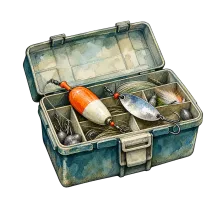
Tackle Box
Everything Dan hands Matt over the summer, from the first swivel to the gaff. If a word in the book stumped you, it is probably here.
The basic rig
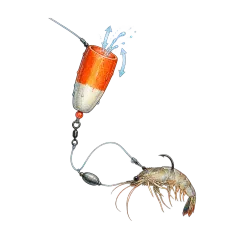
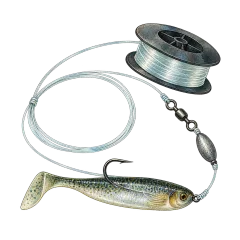
Main line to a swivel so the line does not twist, a small weight to get the bait down, then a short, heavier leader that a snook’s gill plates and oyster shells cannot saw through, and the lure or hook at the end. Dan rigs eight poles this way the night Matt arrives.
Lures & bait
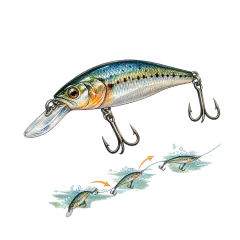
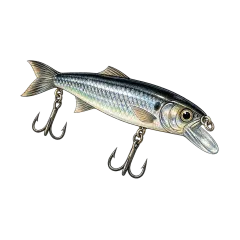
- Lure Ch. 2
- A miniature plastic or metal fish with treble hooks, reeled with just the right jerk to look like a scared meal. Floating or sinking depending on weather, tide, and target.
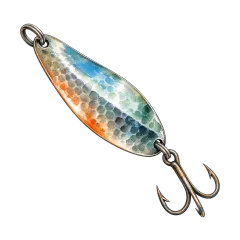
- Spoon Ch. 13
- A curved metal flasher that wobbles on the retrieve. Matt's first post-storm cast.
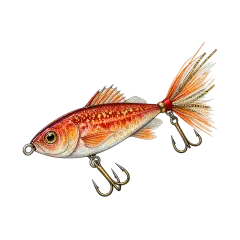
- The 'Golden Flicker' Ch. 14
- Matt's prized red mullet lure with gold flecks.
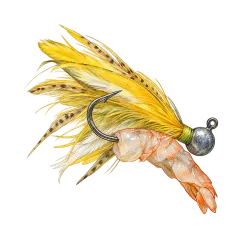
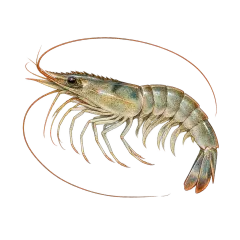
- Live shrimp Ch. 3
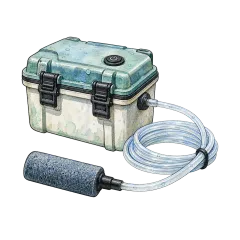
- The universal Everglades bait, kept alive in a bucket with a battery aerator.
- Aerator Ch. 5
- Battery-powered bubbler that keeps bait shrimp alive overnight.
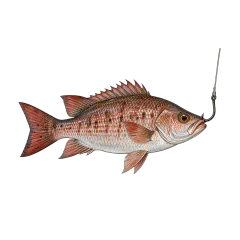
- Live bait Ch. 14
- Snapper tosses a small live snapper into the current and hooks the giant.
Line & rigging
- Leader Ch. 2
- The last few feet of line: heavier or clearer than the main line, with the lure or hook, often a swivel and a small weight above it. Matt adds a thirty-pound leader the night before the big snook.
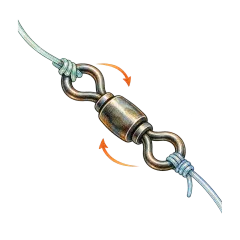
- Swivel Ch. 2
- A tiny metal figure-eight that joins main line to leader and keeps the line from twisting.
- Boat poles Ch. 8
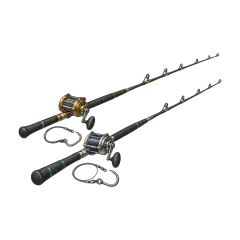
- Heavy rods with woven 30-lb test, steel tip leaders, and forged hooks for beach-casting at tarpon and sharks.
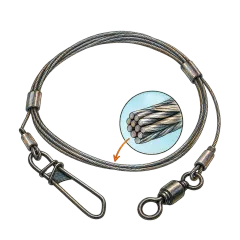
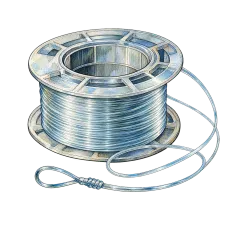
- Steel leader Ch. 8
- Wire leader that toothy fish can't bite through.
- Thirty-pound test Ch. 6
- Line strength rated to hold thirty pounds before breaking.
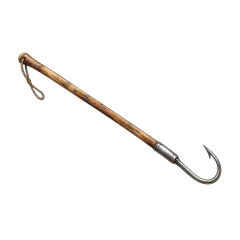
- Gaff Ch. 19
- A big hook on a pole for lifting a fish aboard by the mouth. Snapper's one lucky pass.
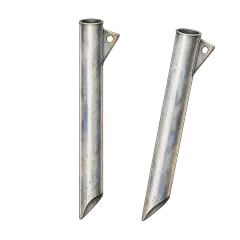
- Sand pipes (rod holders) Ch. 8
- Aluminum pipes hammered into the beach to hold rods after a long cast.
Techniques
- Trolling Ch. 19
- Dragging a lure a hundred feet behind a moving boat. Little effort, long waits, then Old Scarface.
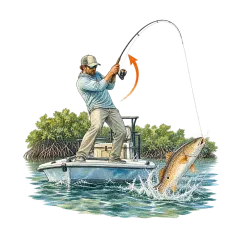
- Setting the hook Ch. 4
- The upward yank at exactly the right bite. Too early and the hook flies out empty — Ch. 4.
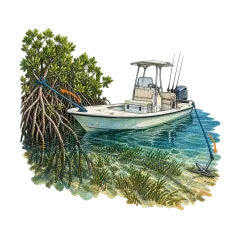
- Storm tie-off Ch. 12
- Bow rope to one mangrove, stern anchor out — the boat 'stretched secure from end to end.'
Reading the water
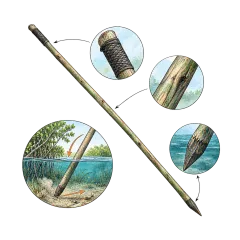
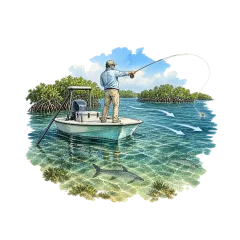
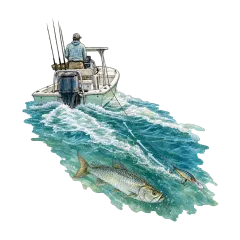
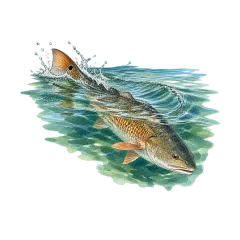
- Throwing a wake Ch. 4
- A big fish moving just under the surface, pushing a ripple like a tiny boat.
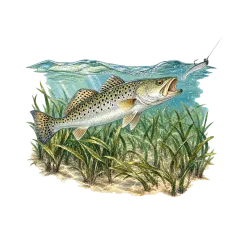
- Grass beds = trout Ch. 7
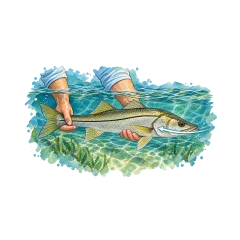
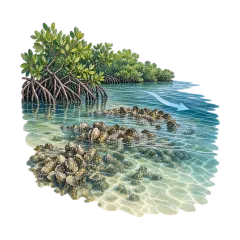
- Seatrout hold over seagrass; mangroves and oysters hold snook and reds.
- Snook closed season Ch. 4
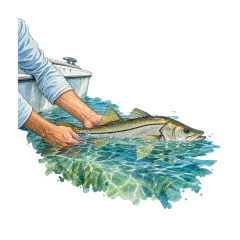
- Snook spawn May–September; the book's Gulf-coast season is closed then and all snook go back.
Boat & safety
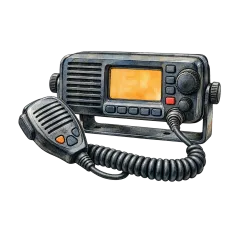
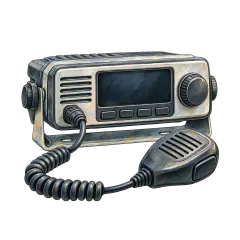
- Marine VHF radio Ch. 10
- How Dan reaches the Sea Belle.
- Channel 16 Ch. 10
- The international hailing and distress channel. Dan says to leave it open 9–10 p.m.
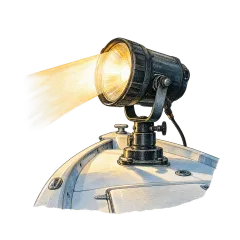
- Spotlight Ch. 17
- Swiveled over the bow to find Doc in the dark.
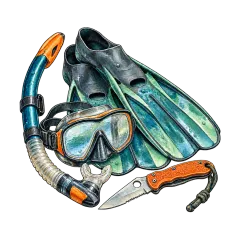
- Snorkel, fins, pocketknife Ch. 16
- Matt's dolphin-rescue kit.
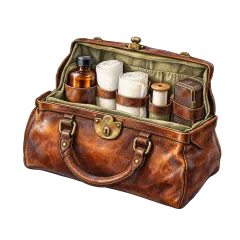
- Doc's medical bag Ch. 17
- Novocain, needles, thread, antiseptic, gauze — and Matt's first stitches.
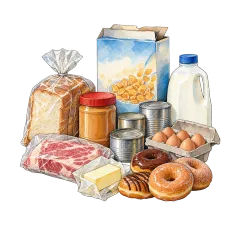
- Provisioning the Sea Belle Ch. 11
- Peanut butter, three loaves of bread, cereal, cans, meat, milk, eggs, butter — 'a week of solid eating for two.' Plus donuts.
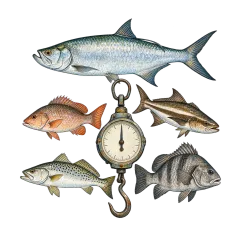
- Tournament categories Ch. 20
- Tarpon, cobia, snapper, trout, drum — by weight. Snook, grouper, and redfish excluded under catch-and-release rules.
Five knots worth knowing
The book never spells out which knots Dan ties, so these are the five every Everglades guide would hand a new mate. The drawings are first drafts: follow the written steps and the linked demonstrations, and have someone who ties them check your work before you trust a fish to one.
-
Improved clinch knot
The everyday hook-to-line knot. Matt's first knot.
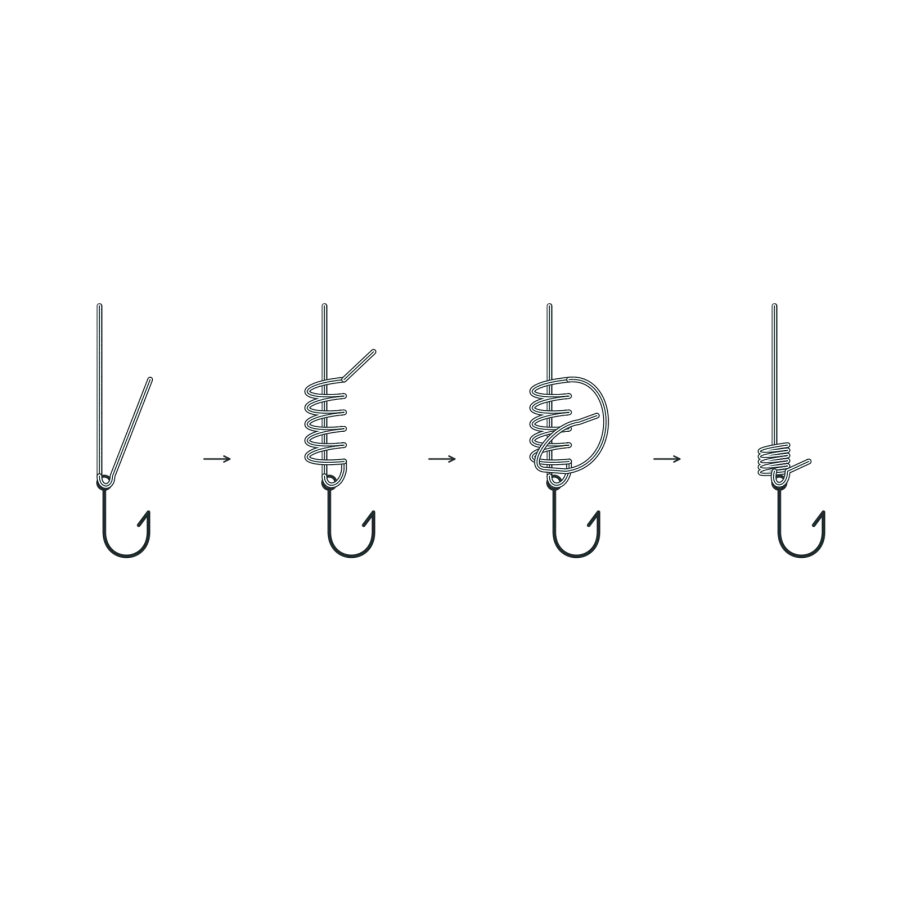
Draft diagram, four stages left to right — check against the demonstration before relying on it. - Pass the tag end through the hook eye.
- Make five turns around the standing line.
- Bring the tag back through the small loop by the eye, then through the larger loop you just made.
- Wet it and pull the turns snug against the eye.
-
Non-slip loop knot
Leaves an open loop at the lure eye so a Bagley Mullet or a spoon can swing freely.
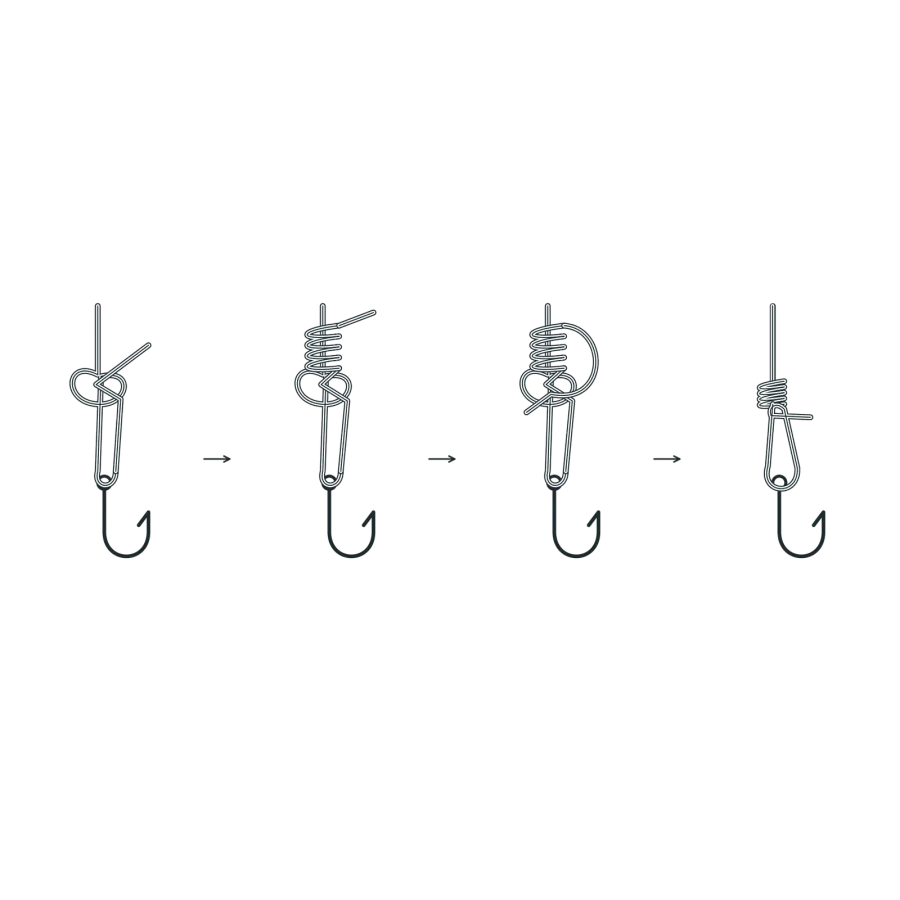
Draft diagram, four stages left to right — check against the demonstration before relying on it. - Tie a loose overhand knot in the line, pass the tag through the lure eye and back through the overhand.
- Wrap the tag around the standing line; lighter line takes more wraps.
- Bring the tag back through the overhand opening on the same side it left.
- Wet it and tighten, keeping the loop open at the eye.
-
Uni knot
Line to swivel. Two of them back to back join line to leader.
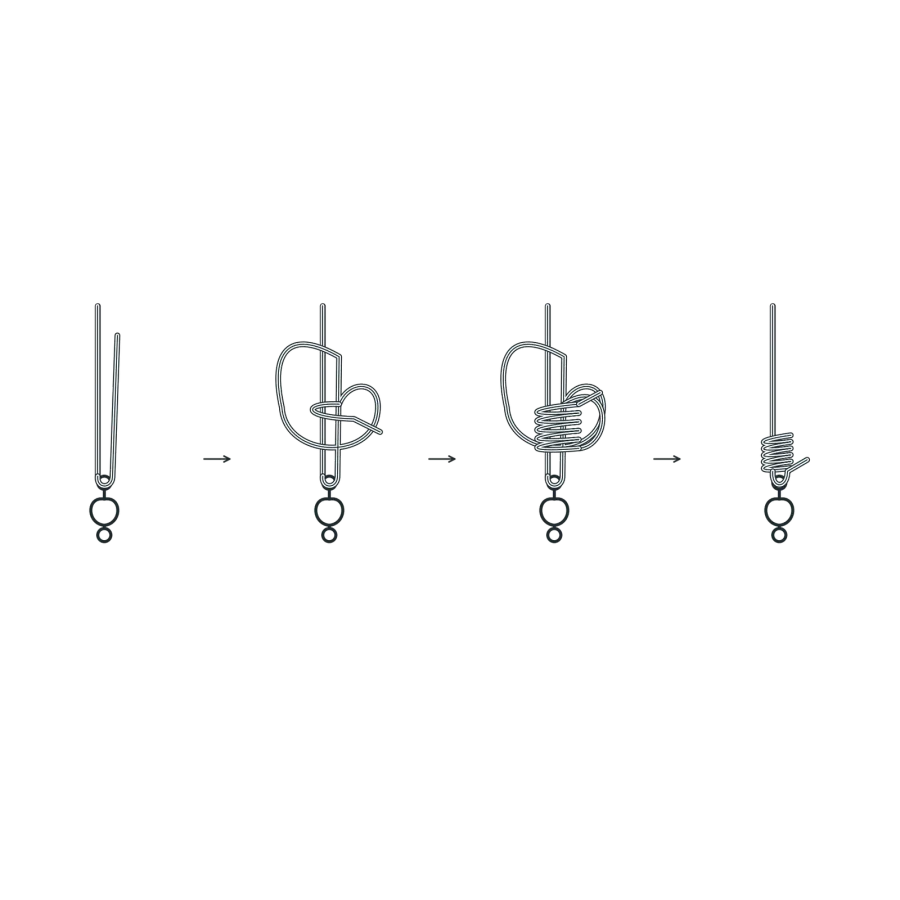
Draft diagram, four stages left to right — check against the demonstration before relying on it. - Pass the line through the swivel eye and double it back.
- Form a loop and start wrapping the tag around both strands inside it.
- Make five turns inside the loop.
- Wet it, tighten the knot, then slide it down to the eye.
-
Palomar knot
The strongest simple hook knot. Good for the forged hooks on the boat poles.
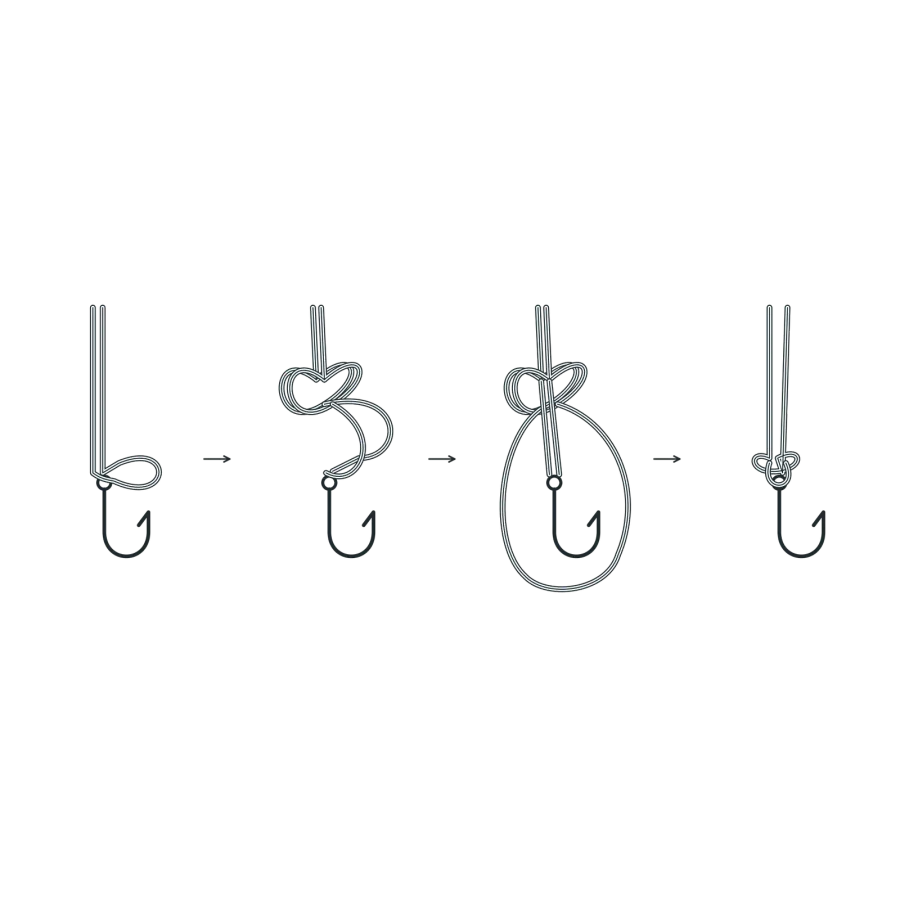
Draft diagram, four stages left to right — check against the demonstration before relying on it. - Pass a doubled loop of line through the hook eye.
- Tie a loose overhand knot with the doubled line.
- Pass the whole hook through the loop.
- Wet it and draw everything down evenly to the eye.
-
Albright knot
Main line to a heavier leader, the way Matt rigs the thirty-pound leader for the big snook.
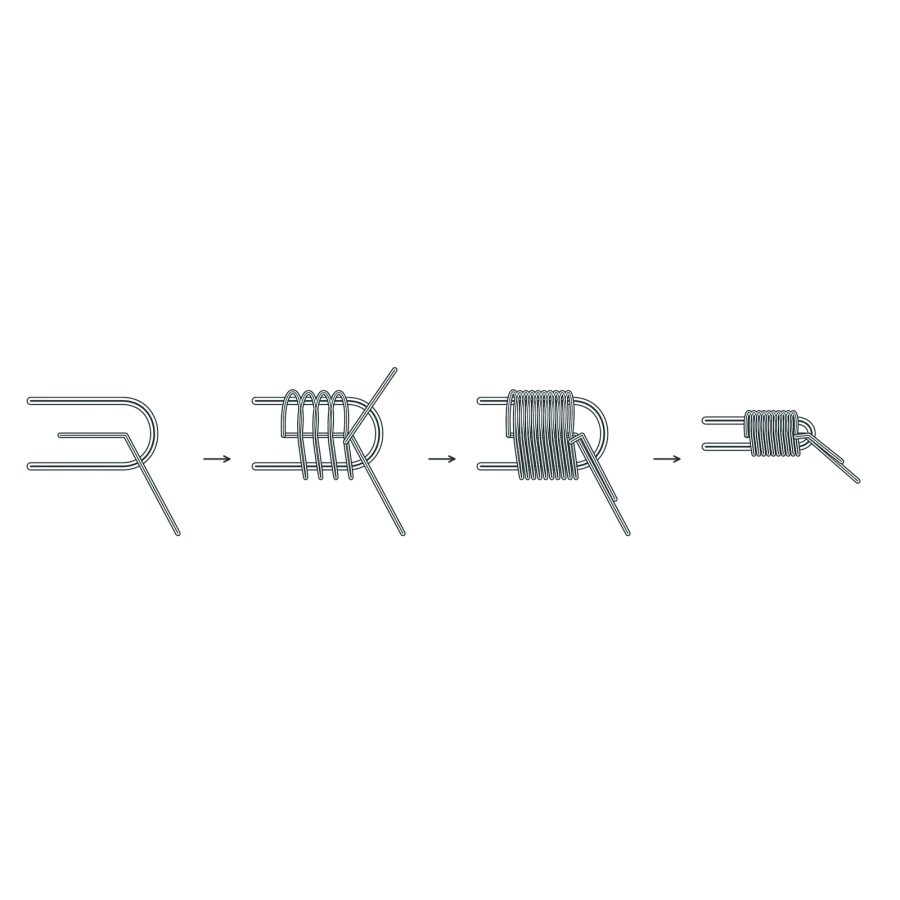
Draft diagram, four stages left to right — check against the demonstration before relying on it. - Fold the heavy leader and pass the lighter line through the fold.
- Wrap the light line back over itself and both strands of the fold.
- After ten wraps, pass the tag back through the fold beside where it came in.
- Wet it and tighten the wraps carefully.
Reading the tide
Dan’s version: the water is not rising and falling so much as the earth is turning through two bulges of ocean the moon and sun pull up. Two highs and two lows most days, about six hours apart, each one roughly fifty minutes later than yesterday. Fish the hour either side of the high and you will have water over the oyster bars and bait moving along the mangroves.