Lesson 5 of 10 · See the bottom
Reading the water
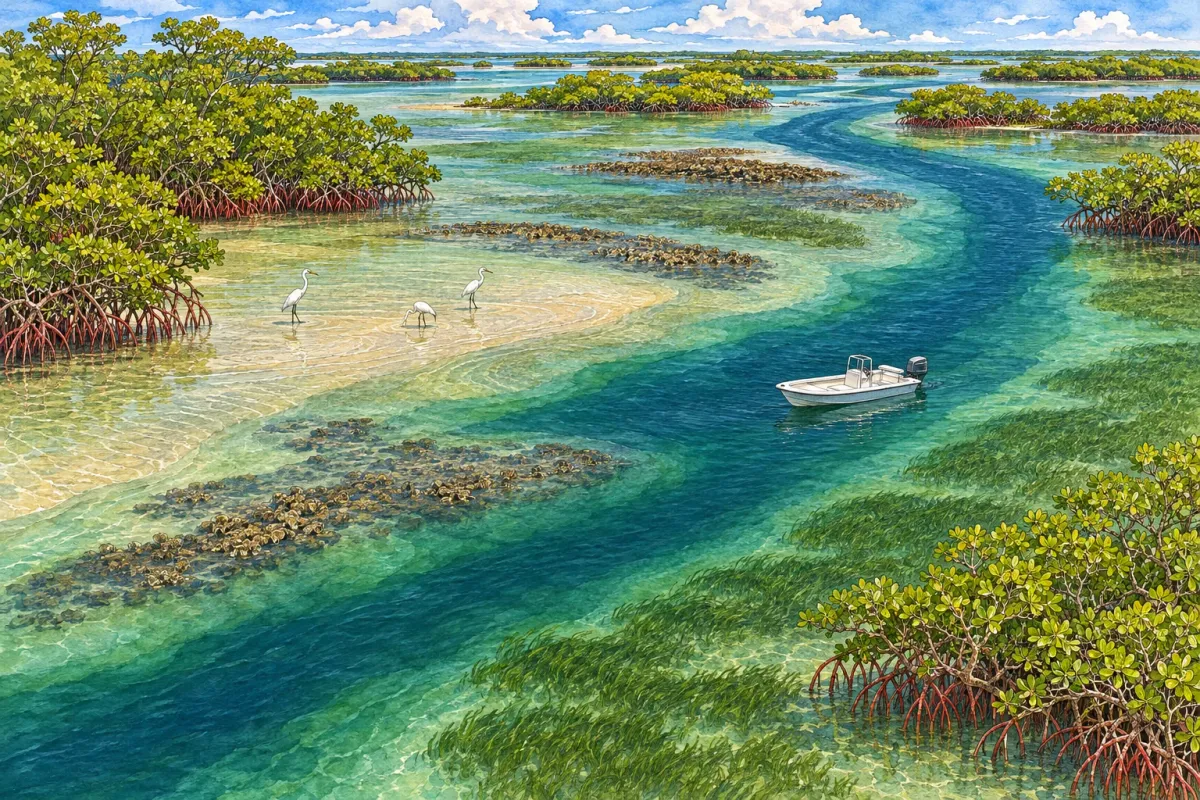
The water tells you how deep it is, if you know how to look. A guide reads it the way you read a page.
Lesson 5 comes with the Experience
Lessons 1 and 2 are free. The other eight, Rig It Right, the whole book to read and hear, and all 23 missions come with the Summer Fishing Guide Experience.
- Color is depth In clear water, dark blue-green is deep, pale green is thin, and tan or brown is a bar. An old rhyme: brown, brown, run aground.
- In the backcountry, color lies Everglades rivers run the color of tea, and tea hides the bottom. There you trust the chart, the markers and the depth finder.
- Watch the surface Nervous, rippled water over a calm patch often means a bar just underneath. A line of foam shows where two currents meet.
- Birds don’t lie If a heron is standing where you’re headed, it’s probably shin-deep. Slow down and go around.
- Run the outside of the bend In a river the current digs the outside of each curve deep and piles sand on the inside.
- The tide changes the map A flat you crossed at high tide can be dry land four hours later. Know which way the water is going before you go in.
Guide’s rule
If you’re not sure it’s deep enough, it isn’t.
In the book: Dan teaches the tide in Chapter 2: a morning high means plenty of water over the oyster bars.
Three questions
1. In clear water, a pale tan patch ahead probably means…
Brown, brown, run aground.
2. A heron is standing right in your path. That tells you…
Wading birds stand in water about as deep as their legs.
3. In a river bend, the deeper water is usually on the…
The current scours the outside and drops sand on the inside.
Lesson passed.