Guide School · game
Rig It Right
Read the tide, the water, the wind and the depth. Then pick the rig a guide would tie on first.
The Mate and Guide levels come with the Experience
The Deckhand level is free. The other twelve scenarios, Learn the Boat, the whole book to read and hear, and all 23 missions come with the Summer Fishing Guide Experience.
1 / 6 · score 0 · best 0
- Where
- Depth
- Tide
- Water
- Wind
- Light
Which rig goes on?
There is more than one right answer on the water. These are the rigs most guides reach for first; the fish get the last word. Sizes, seasons and bag limits change, so check FWC before you keep a fish.
Seven rules of rigging
- Can’t see your lure a foot down? Make noise, flash or smell: a popping cork, a gold spoon, a live shrimp.
- Clear and calm? Go quiet, light and natural. Splashy rigs send fish running.
- Skinny or grassy? Go weedless, or you’ll catch salad on every cast.
- Deep, or the tide is ripping? Add weight until you can feel the bottom.
- Wind in your face? Throw something small and heavy that cuts through it.
- Dawn, dusk or a gray sky? Look up. Low light is topwater time.
- Water not moving? Slow down, or go find water that is. Moving water feeds fish.
Study before you play
The Rig Locker
Eight rigs cover most days in the Ten Thousand Islands. Know what each one is for, and when to leave it in the box.
-
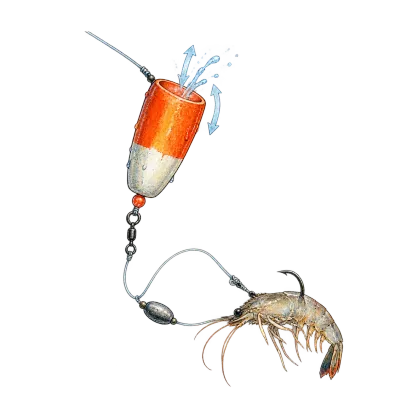
Popping cork
On the line: A cupped cork, a foot and a half to two feet of leader, a hook or a light jig, and a live shrimp.
Fish it: Cast it out and let it settle. Pop the rod tip twice, then wait. The pop sounds like a fish feeding, and the shrimp hangs right above the grass.
Tie it on for: Grass flats two to five feet deep, moving water, stained water and a breezy chop. The easiest rig for a beginner: when the cork goes under, reel.
Leave it in the box: Dead-calm, gin-clear, skinny water. The splash sends fish running.
Ch. 3 How Matt caught his first snook, and most of his redfish.
-
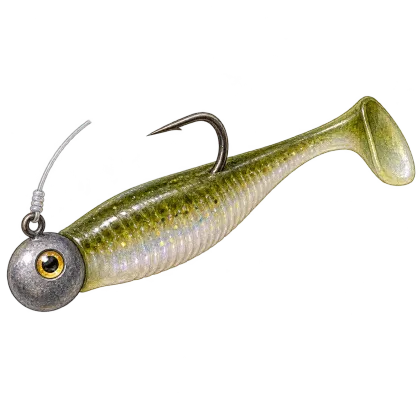
Jig and paddle tail
On the line: A lead jig head and a soft-plastic paddle tail. An eighth of an ounce for the shallows, a quarter ounce for depth, wind or current.
Fish it: Cast, let it sink, then hop it or swim it back. The tail thumps the whole way.
Tie it on for: Covering water when you don’t know where the fish are: sand potholes, channel edges, casting into the wind.
Leave it in the box: Thick grass and oyster shell. The open hook grabs everything.
-
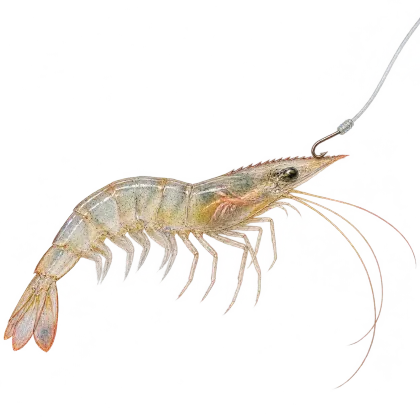
Free-lined live bait
On the line: Leader, a small circle hook and a live shrimp or baitfish. No cork, no weight.
Fish it: Cast up-current and let the tide carry it along the roots and under the branches, the way real food arrives.
Tie it on for: Clear water and a gentle, steady current along the mangroves. The quietest rig in the box, for fish that have seen it all.
Leave it in the box: Hard wind or a ripping tide: with no weight it never gets down to the fish.
Ch. 14 Snapper tosses a small live bait into the current, and hooks the giant.
-
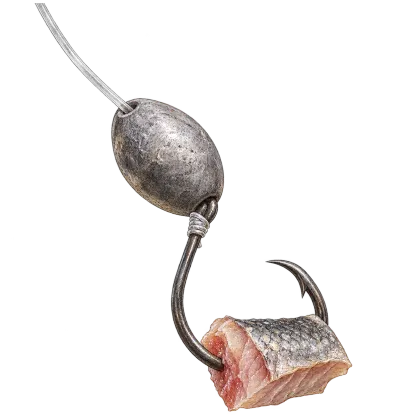
Knocker rig
On the line: An egg sinker that slides down the leader to knock against a circle hook, baited with shrimp or cut bait.
Fish it: Drop it straight to the bottom, keep the line tight and wait for the thump.
Tie it on for: Deep holes, passes and pilings with a strong current. Bottom fish: snapper, sheepshead, black drum, grouper.
Leave it in the box: Shallow grass flats. It just buries itself.
-
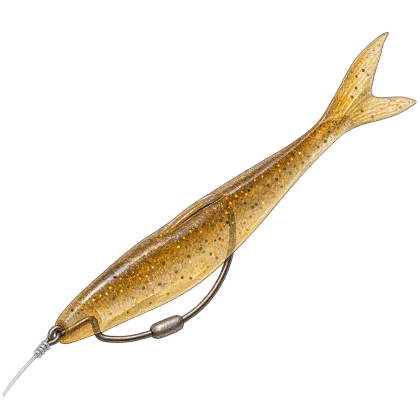
Weedless soft plastic
On the line: A slim soft-plastic jerk shad on a wide-gap hook with a little belly weight, the hook point tucked back into the plastic.
Fish it: Cast past the fish, never on its head. Twitch, twitch, pause.
Tie it on for: Water under two feet, thick grass, oyster edges and tailing redfish. It lands softly and slides through anything.
Leave it in the box: Deep water or heavy current: too light to get down.
-
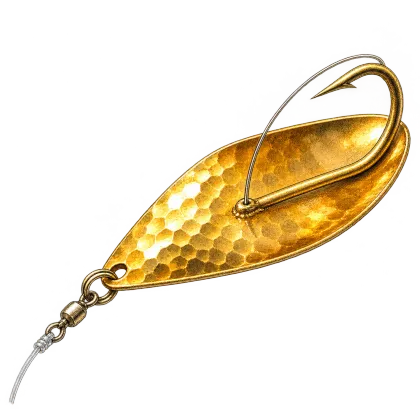
Weedless gold spoon
On the line: A gold spoon with one fixed hook and a wire weed guard, on a small swivel so it doesn’t twist the line.
Fish it: Cast it a mile and reel just fast enough to feel it wobble above the grass.
Tie it on for: Stained or muddy water, wind, and hunting for redfish across a big flat. Fish see the flash and feel the thump.
Leave it in the box: Deep holes. It’s a shallow-water searcher.
Ch. 13 A spoon was Matt’s first cast after the storm.
-
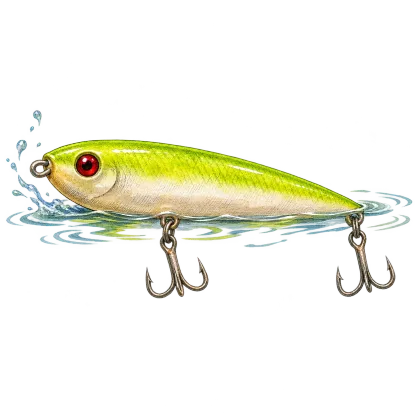
Topwater plug
On the line: A floating cigar-shaped plug, tied on with a loop knot so it can swing.
Fish it: Twitch the rod tip on a slack line so the plug zig-zags: ‘walking the dog.’ When a fish blows up on it, wait until you feel weight before you lift.
Tie it on for: Dawn, dusk and overcast days on a calm surface, along shallow shorelines and flats. Snook and trout.
Leave it in the box: Bright midday sun, a hard chop, or floating grass that fouls the hooks.
-
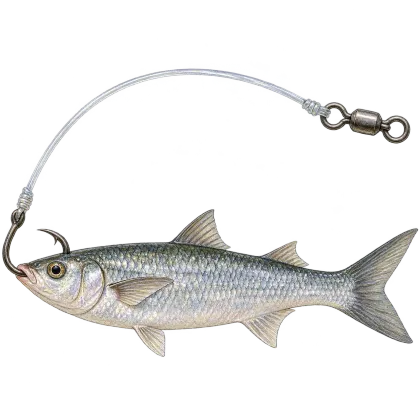
Big live bait, heavy leader
On the line: A big circle hook, several feet of heavy leader and a live mullet or crab.
Fish it: Set the bait ahead of rolling fish and let them find it. When one eats, don’t jerk: just come tight and hang on. When it jumps, bow the rod to it.
Tie it on for: Tarpon rolling in a pass or a river mouth with the tide moving.
Leave it in the box: Everything else. This is big-game tackle.